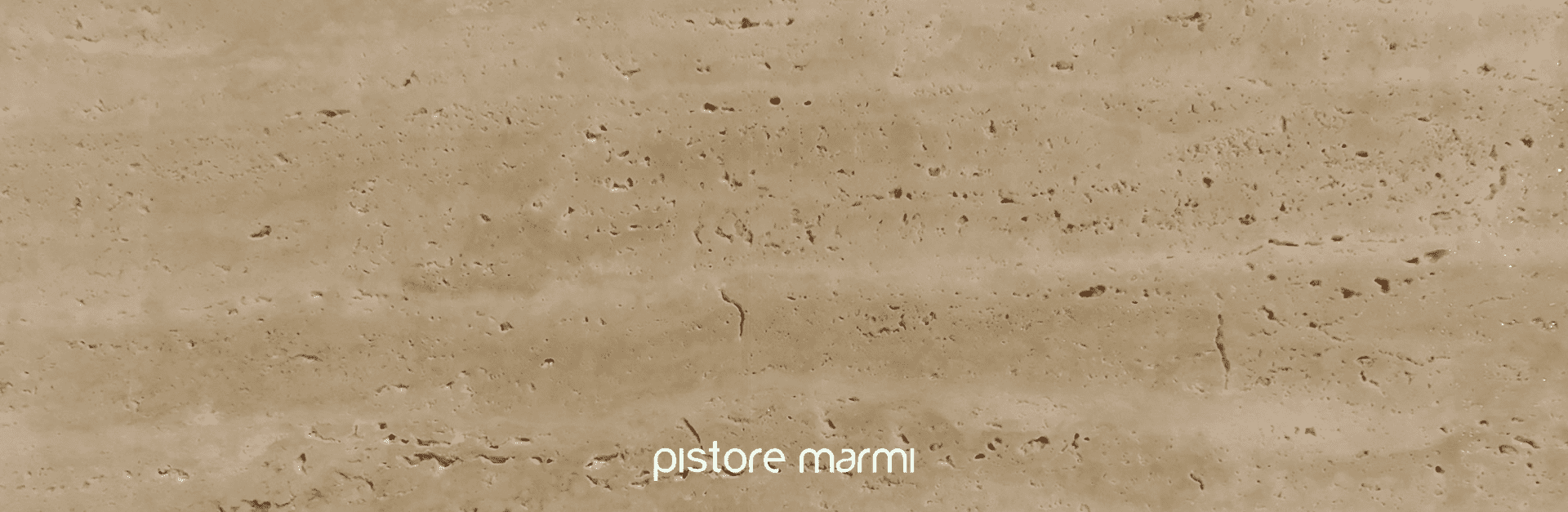
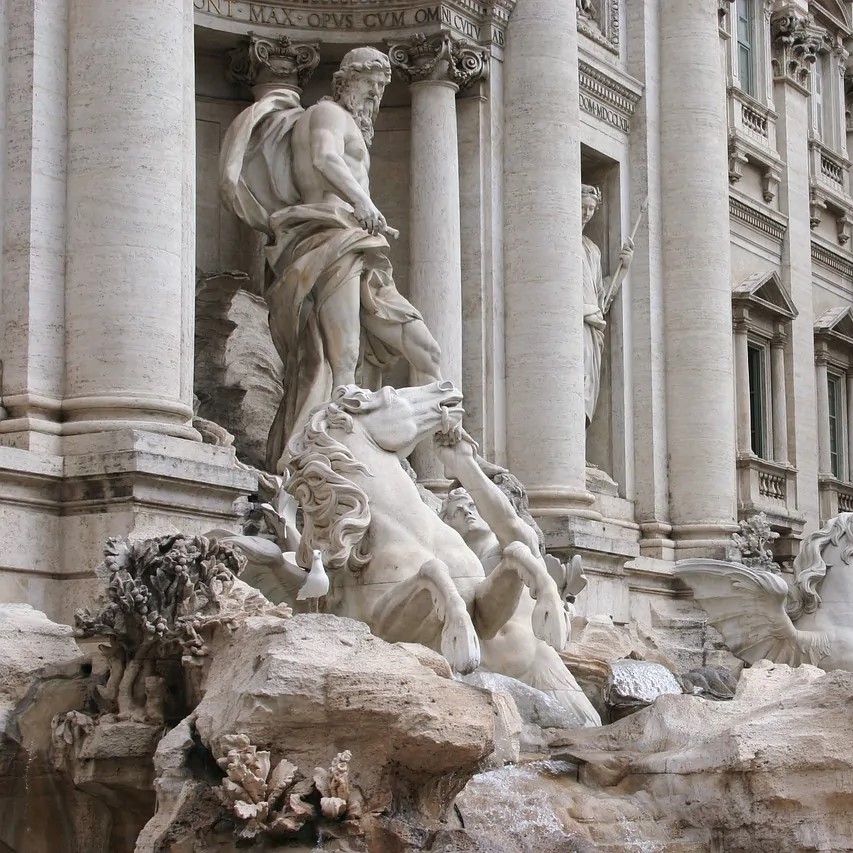
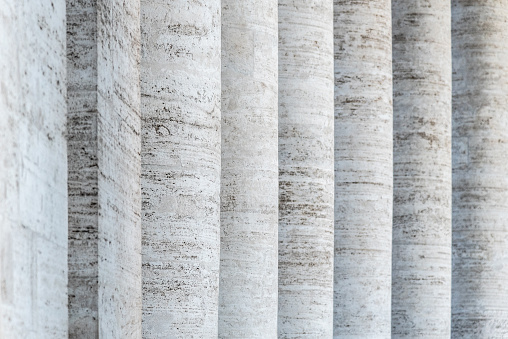
Travertine is a natural stone that has spanned the centuries, becoming a symbol of elegance, luxury and durability. Used since ancient times to create architectural and artistic masterpieces, such as the Colosseum, the Trevi Fountain and St. Peter’s Basilica, this material continues to play a leading role in contemporary design projects.
With its unique veining, neutral tones, and an extraordinary variety of finishes, travertine fits every style, from classic to modern, offering endless aesthetic possibilities.
In this article, we will explore the history of this iconic stone, its main types and finishes, and discover why it continues to be one of the most popular choices for floors, walls and exclusive furnishings.
History and Characteristics of Travertine
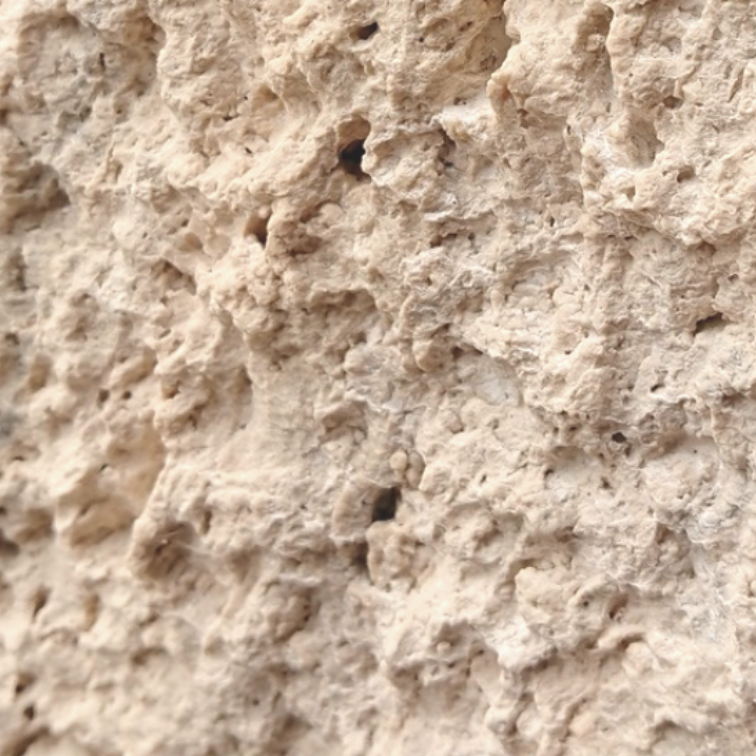
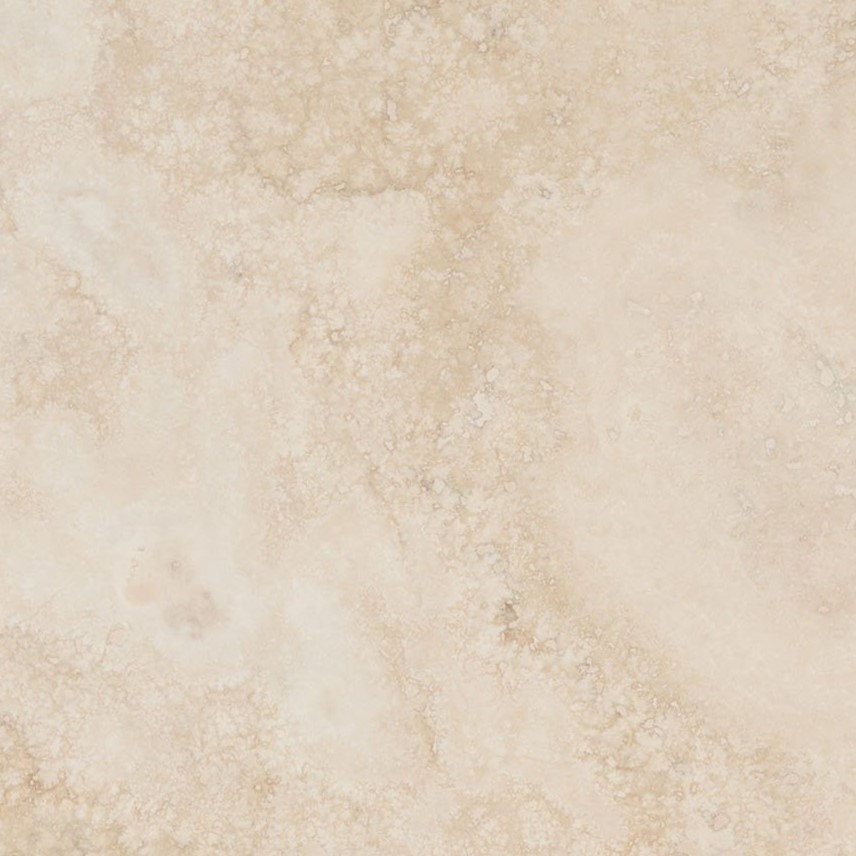
Travertine is a sedimentary limestone rock formed mainly of calcium carbonate. Porosity is one of its most distinctive features and is the result of the stone’s formation process, during which mineral-rich water flows through sedimentary rocks, leaving behind calcium deposits that create these cavities. These holes give the stone a natural texture that can be maintained with an open hole or treated with grout (filled hole).
Travertine is quarried in the Tivoli and Guidonia area near Rome. There are other quarrying basins located in central Italy between Tuscany and Marche. In the rest of the world we find numerous travertine quarries in North Africa (Tunisia and Egypt), the Middle East (especially Turkey and Iran), and Chile.
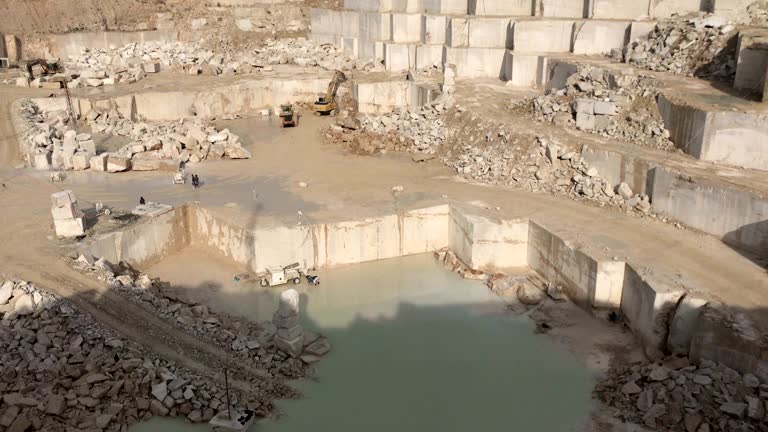
Travertine is available in a range of natural hues from ivory white to beige, gray to brown, with shades that can include touches of golden yellow and red.
Its lightness, strength and insulating properties make it perfect for both decorative and functional applications.
Key features include:
- Strength and durability: it is a strong and compact material, perfect for indoor and outdoor flooring and cladding.
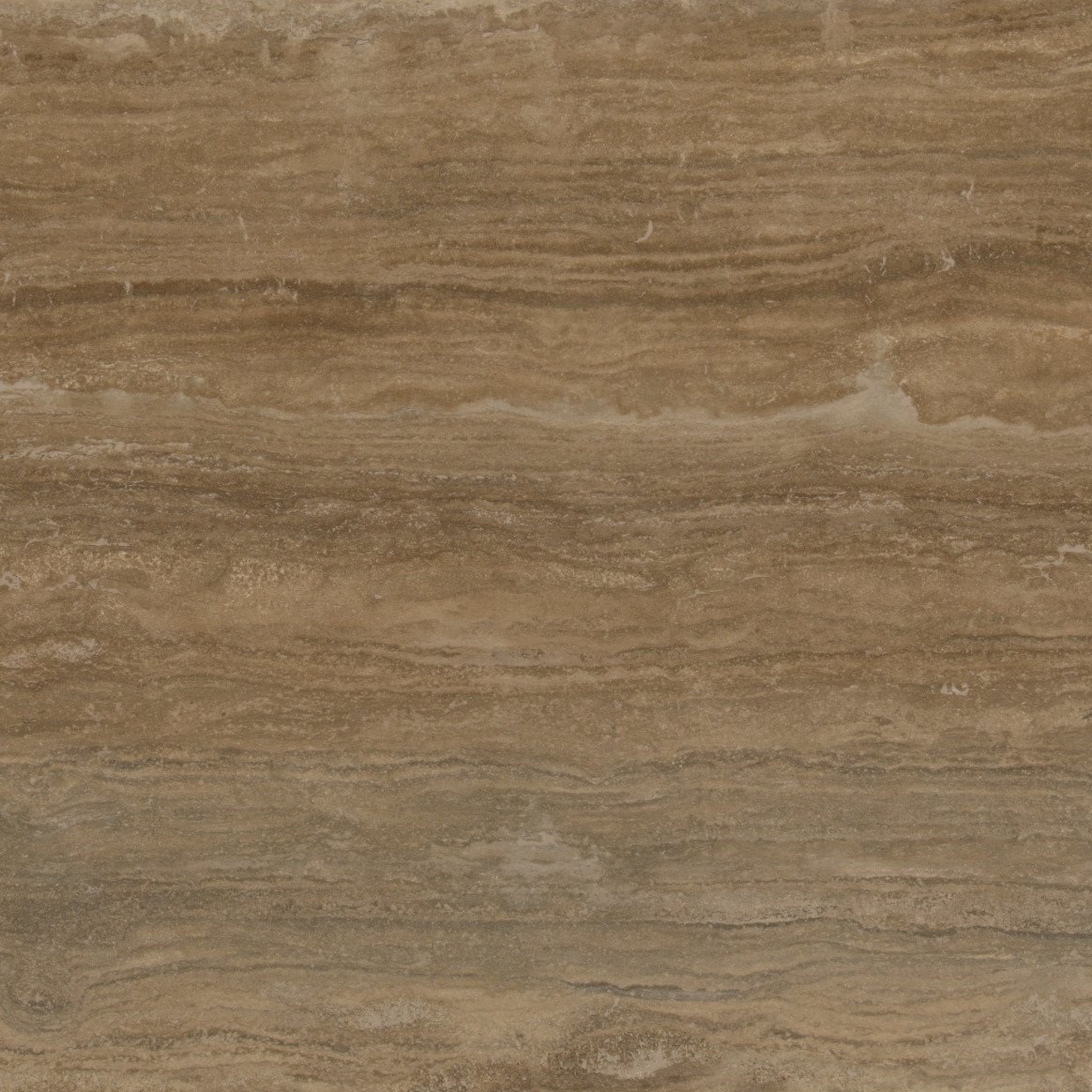
- Natural appearance: available in warm shades such as beige, cream, walnut and lighter variants such as White Travertine marble.
- Versatility: suitable for a variety of finishes and applications.
Types of Travertine
There are several types of travertine, each with distinctive color and visual characteristics:
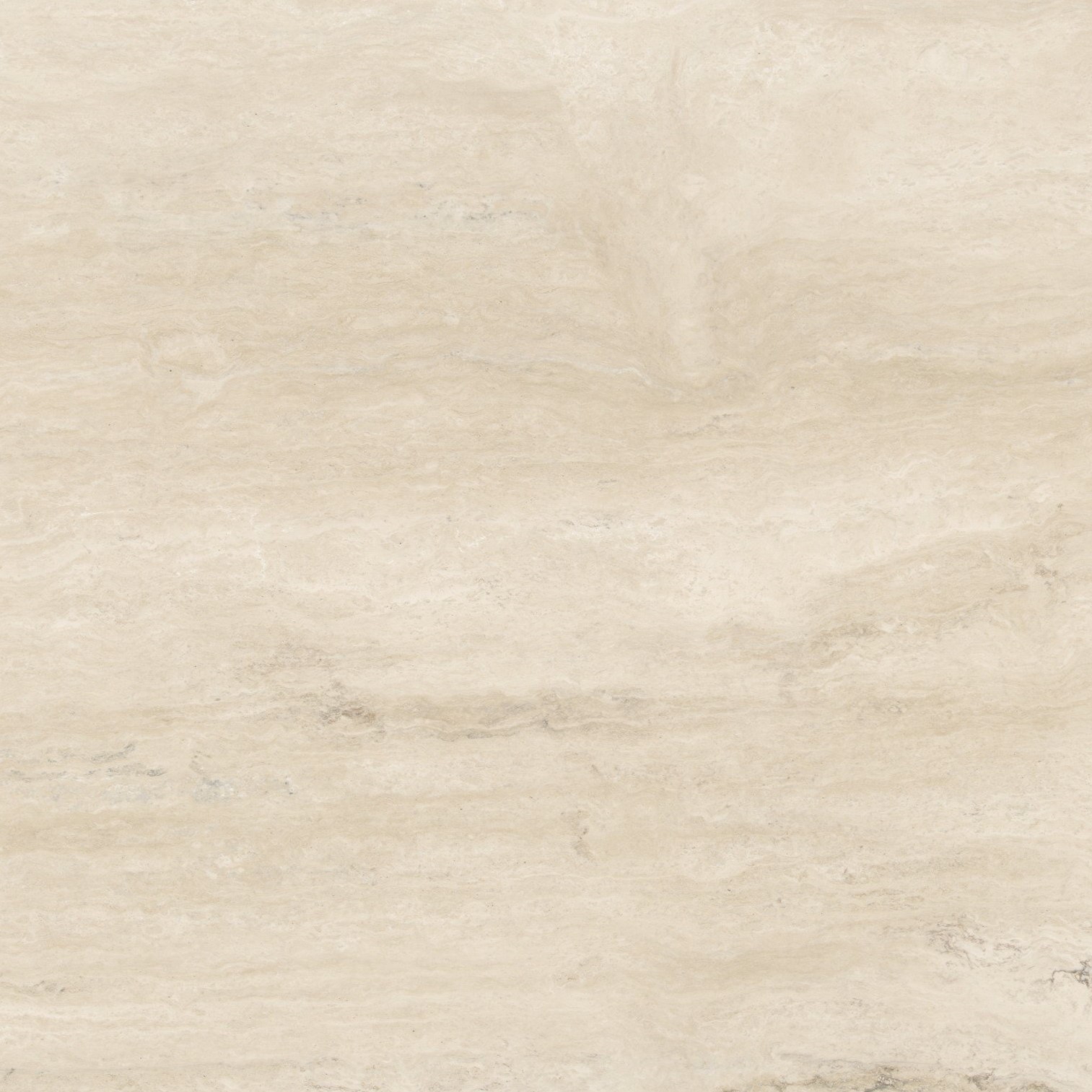
- Roman Classic Travertine: the most traditional version, with warm beige tones and delicate veining.
- Navona Travertine: characterized by a lighter, more uniform palette, perfect for bright, minimalist environments.
- Travertino Noce: The background color is beige, dark and warm, marked by striking cream veins that give a certain brightness to the whole, perfect for creating color contrasts.
- White Travertine: fine and bright, perfect for modern and refined projects.
- Silver Travertine: with gray and silver shades, suitable for contemporary settings.
- Travertino Alabastrino: a prized variant of White Travertine, its white background is enriched with light veins ranging from yellow to havana, with rare silver hues. It has a homogeneous and compact texture, generally devoid of pores.
- Travertino Striato: compact and ductile, with light and warm colors ranging from beige to gray-beige with a marked striation due to a structure composed of lighter and darker lines.
In addition to the different shades, the travertine block can be cut in two ways: one highlights graphic vertical or horizontal lines, while the other reveals softer, more natural shades.
Each variation can be chosen according to the context of use and the stylistic requirements of the project.
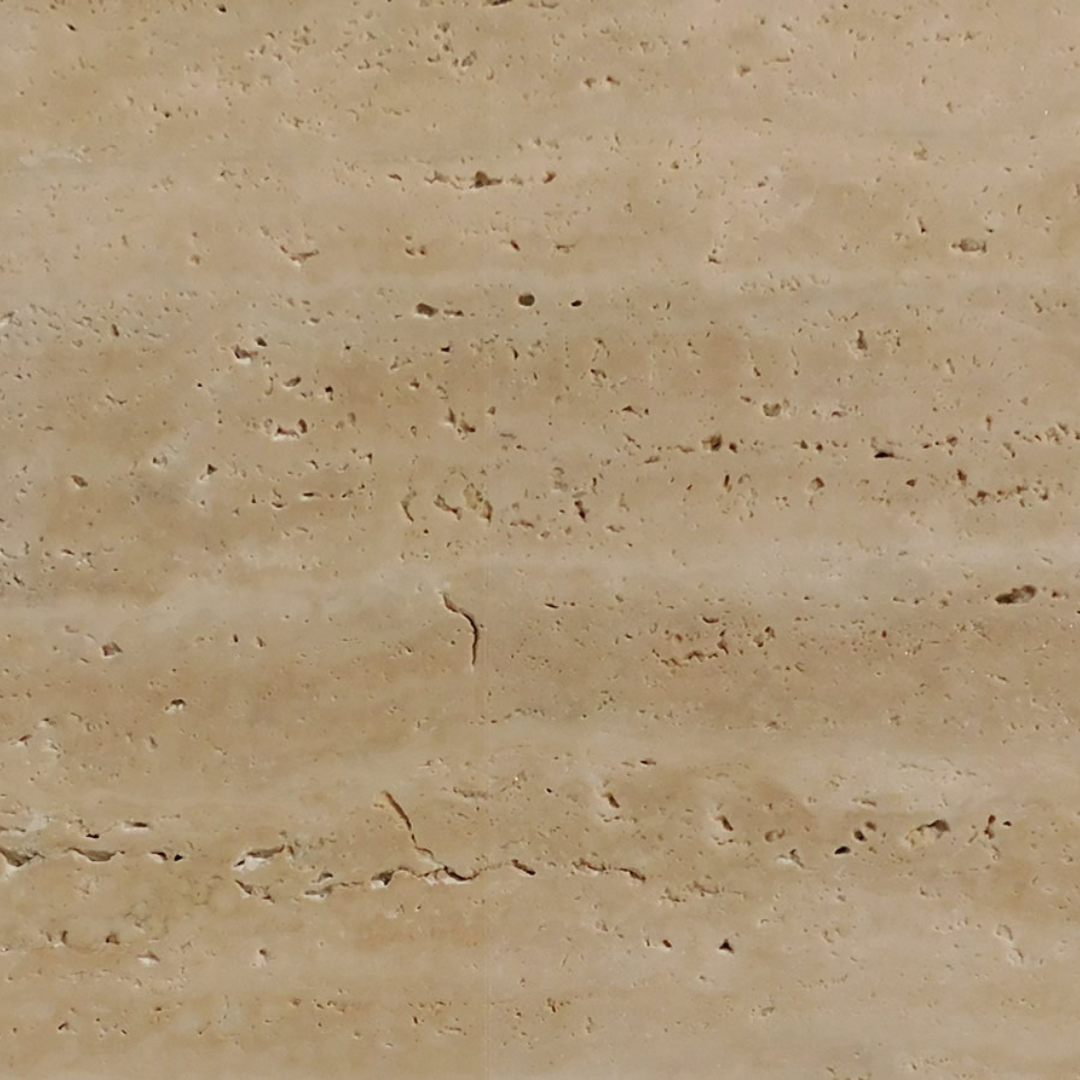
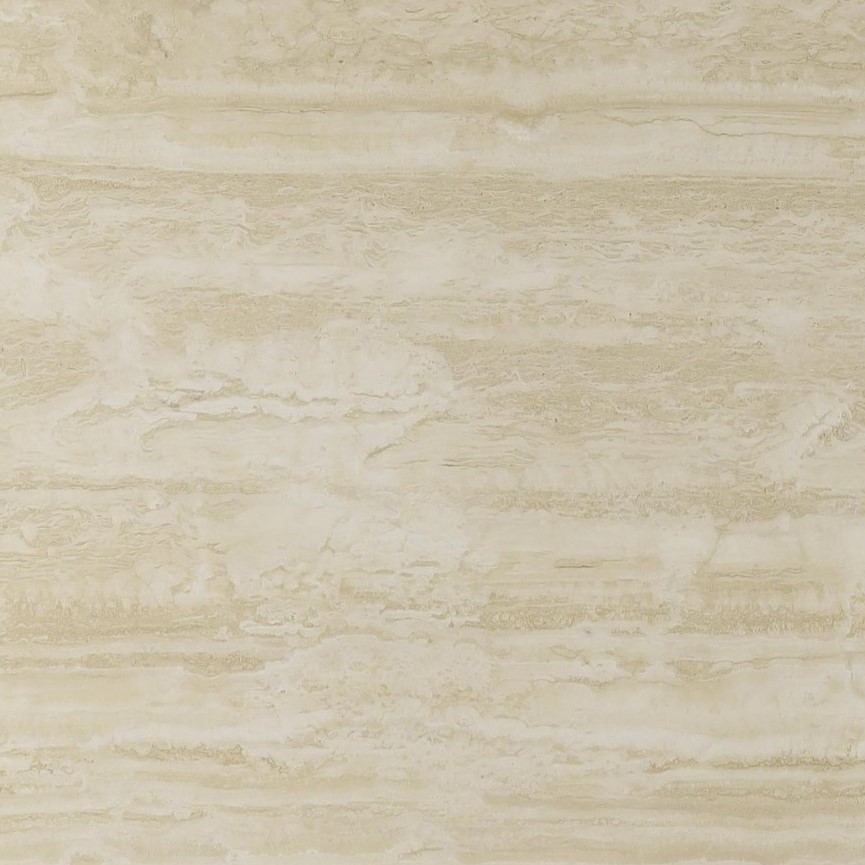

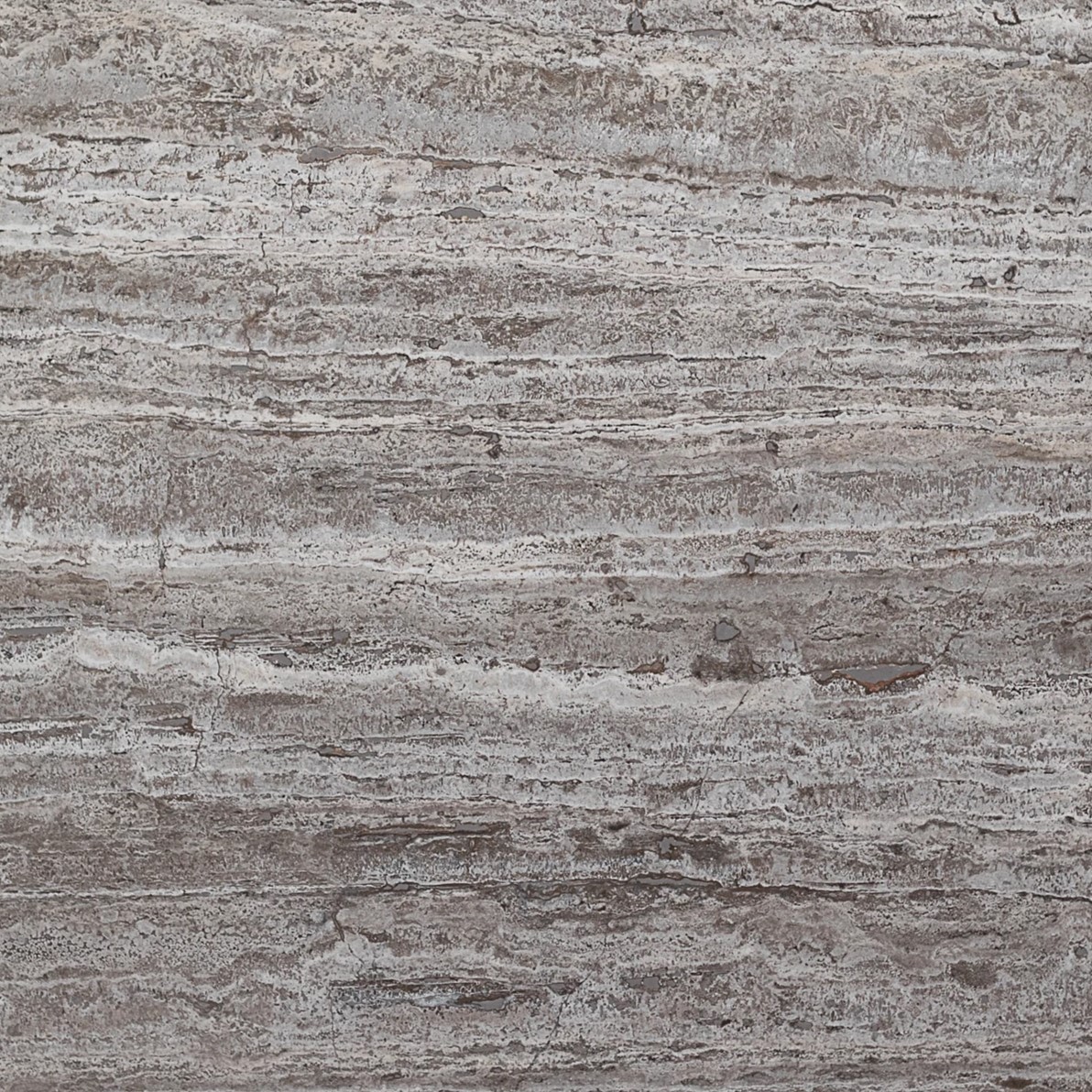
Travertine Finishes
The surface of travertine can be worked in a variety of finishes, offering options to suit every design need.
- Open Hole Travertine: maintains the natural appearance of stone, with visible porosity. Ideal for decorative walls.
- Filled Hole or Grouted Travertine: natural holes are filled in for a smoother, easier-to-clean surface. Ideal for smooth, functional surfaces, such as floors and kitchen countertops.
- Honed Travertine: smooth and matte surface, suitable for modern environments.
- Polished Travertine: gives brilliance to the stone, enhancing its veining.
- Scored Travertine: surface treated to form stripes that create plays of light and shadow, changing the perception of space.
- Bush-hammered Travertine: rough finish, ideal for non-slip outdoor flooring.
- Brushed Travertine: slightly wavy surface and soft to the touch.
- Crust Travertine: the roughness and irregularity of the material is accentuated, creating precisely a “crust” on the surface, lending a robust and textural character to the surroundings.
The choice of finish is crucial in determining the final appearance of the stone, whether it is a travertine floor, wall cladding or decorative elements.


Maintenance of Travertine
Although it is a durable stone, travertine requires some care to keep its beauty intact:
- Daily cleaning: use neutral detergents and soft cloths.
- Protection: apply water-repellent treatments to prevent stains and seepage.
- Extraordinary maintenance: in case of holes or scratches, travertine can be restored with specific grouts.
For surfaces such as a travertine marble bathroom or a travertine kitchen, it is recommended to avoid aggressive acid-based products.
Prefer grouted travertine for horizontal surfaces subject to wear, such as kitchen countertops and floors.
Price of Travertine
The price of travertine varies depending on several factors:
- Type: fine variants such as White Travertine or Navona Travertine may have higher costs.
- Finish: special processes such as polishing or bush-hammering affect the price.
- Thickness and size: thicker slabs and custom sizes cost more.
- Quality: stones with fewer imperfections and regular veins are more expensive.
Considering these variables, it is very difficult to give an indication of cost. However, we can estimate that the price of custom machined travertine starts from 120/140€ per square meter (for 2 cm thick slabs).
In general, travertine is an excellent investment because of its durability and the aesthetic value it adds to rooms.

Travertine in Contemporary Design
In recent years, travertine has established itself as the absolute protagonist of interior design. Its palette of natural tones and extraordinary versatility make it perfect for both minimalist projects and solutions with a bolder character.
While modern design often looks to innovation, the value placed on time-defying materials is growing. Travertine, with its durability and ability to keep its beauty intact over the years, perfectly embodies this philosophy. In an age when sustainable and durable design is the focus, this stone is an ideal choice for elegant, long-lived spaces.

The refined simplicity of travertine blends perfectly with contemporary design, which celebrates the purity of natural materials and the essentiality of forms. Its neutral tones, easily matched with any color palette, make it ideal for modern environments characterized by subdued colors and clean lines.
Travertine’s ability to harmonize with other materials and textures makes it a must-have choice for those who want rooms with contemporary taste and timeless aesthetics.
And you, in what environment would you like to use this magnificent stone steeped in history and a symbol of luxury and elegance?
Tell us about your project, we will be happy to help make it happen!
Contact us at info@pistoremarmi.com
Learn how we used Travertine to make an elegant wall decoration for a bedroom. Read the article!
Looking for inspiration on how to use Travertine in your interior and exterior design projects? Read our dedicated article here!
Pistore Marmi specializes in marble manufacturing for custom projects and objects. From the selection of slabs and blocks to on-site installation, from concept to design.
We are located in Cologna Veneta, in the province of Verona.
We ship and install worldwide.